


Soccer, in its purest form, can represent so much to those who enjoy it.
The thrill of a well-struck shot breaching the back of the net. The joy of a well-executed dribble. The tension of a last-ditch save. The reward of a hard sliding tackle.
All of these actions can often yield a strong emotional reaction. No matter if you’re playing or watching, they give a rush of dopamine that sticks in your mind, subconsciously drawing you to the sport.
But while the thrill of soccer is what brings people to fall in love with the game, what is something that can keep people there? The feeling of community.
The idea of having a sport that can be so easily played across the world, and is loved and adored everywhere, soccer can also be used as a way to fit in, or as a way to meet new people.
Sometimes, when a language barrier might exist, a soccer ball can be the way to bridge that gap. Or when looking to meet friends, a soccer pitch might be the best way to meet like-minded individuals that share common interests.
Through that, you can truly see the value that the sport brings, far beyond just the basic nature of the game itself.
“Soccer represents togetherness to me,” Cyrus, 29, explained. “It’s something you can share with someone even if you do not speak the same language.”
“For example, soccer helped me find my footing and fit in when I was in university,” he continued.
Jeff, 37, finds himself in a similar boat, having found people through the sport that he counts among his best friends today.
“I’ve made some lifelong friends via the sport,” he admitted.
And that bond can extend even beyond just playing the sport, too. Mike, 49, for example, has also built a strong network of friends by interacting with them on Twitter, as they all united around their love for the Canadian men’s national soccer team over the past couple of years.
As a result, when he went to a few games in-person recently, as Canada made a push to return to the World Cup for the first time in 36 years, he found himself sharing some core memories with some people he had never met in person. Due to their love for the sport, they shared a core purpose – a love for the sport.
“I’m someone who is fairly antisocial outside of my friend group,” Mike explained. “But going to Toronto for Canada games and having been a part of the Canadian Soccer community on Twitter, I found myself going up to strangers, something I’d never do, but it just felt right to introduce myself. Sometimes it was as simple as a ‘how are you?’, but other times it was genuine human moments with people I had only ever interacted with online”
Yet, that is the sort of community that the sport can create. From those who you might play with on a local team, or those you interact with online, the love for the sport can often be a unifying flag that one can put themselves behind.
Just take the World Cup as an example of how true that can be.
A true soccer festival, one that brings people across the world to either cheer for their teams, jeer their rivals, or just enjoy the high level of competition that is on display, the tournament has become so much more than just the 90-minute games. Often, it can be about meeting fans from different countries, partying, and just otherwise enjoying the spectacle that has become attached to the support.
Assembled behind a nationalistic pride and joy of being able to cheer on the countries that participate, it can often be a chance to be proud of your heritage, conveying that through that aforementioned passion and desire that soccer can bring.
Felipe, 35, has certainly found that out through the years. A first-generation immigrant to Canada from Colombia, a country with a strong soccer heritage, he feels that the World Cup often serves as a unifier for him, one that helped him feel welcome in this country he now calls home.
In what was a strange new country for him at the beginning, one that he was just looking to adjust to, soccer turned out to be the language that helped him adjust, with the thrill of cheering on Colombia proving to be a good way to find the footing he otherwise might’ve struggled to find.
“It has helped feel at home with my community, especially at the World Cup where we are all cheering on our national team,” he explained.

Yet, for all of the beauty that the World Cup can bring, it’s also worth noting the unfortunate ugly side that can be linked to it.
As seen with this current World Cup in Qatar, for example, where the staging of the tournament has led to staggering human rights violations that have caused the deaths of thousands of migrant workers, it’s been used as a prime example of how soccer can be used to cover-up bigger issues within a society.
A prime example of sports washing, issues such as Qatar’s failure to welcome LGBTQ+ people and their migrant worker crisis have quickly been ignored due to the grandeur of this spectacle.
In a sport that’s supposed to be for everyone, a tournament such as this World Cup in Qatar seems to stray far from that notion, especially for those who find themselves in certain marginalized groups.
Understandably, such a situation has prompted a mixed reaction on how to feel about viewing such a tournament. And these sorts of issues aren’t exclusive to Qatar, as sports can often be used to hide the symptoms of bigger societal issues.
For example, there can often be situations where the team that takes the field to represent the country doesn’t always reflect the current realities of said country, which can create divisions back home.
Canada, in fact, is a team that had faced the latter problem in the past. Before, soccer was typically an upper-class sport in Canada, one that only the rich elite could afford. Given that members of that elite were typically white, they’d dominate the higher levels of the game, despite it often being a diverse sport at the grassroots levels.
Despite the fact that soccer is supposed to be one of the simplest and cheapest sports to access, explaining the high participation rates globally, Canada made it hard for many even to play the sport at the highest of levels, cutting out several players from being able to play the game that they loved.
Now, however, that’s started to change.
With the men’s national team having now ended their 36-year drought from the World Cup, they didn’t just surprise observers with how talented and skilled they were on their qualifying run, but also with the makeup of the team, as it was made up of a strong mix of people of colour, as well as immigrants.
Led by their star player, Alphonso Davies, himself born in a Ghanian refugee camp as his family fled war in Liberia, and a whole squad of many that were either first or second-generation immigrants, this Canadian group formed a team that looked like what many views this country to be – a diverse, welcoming population.
In fact, consider this – during their run to qualify for Qatar, Canada actually had players who were from five different continents play on their team at some point, just further showing how diverse of a group this team has truly become.
And as a result, as they headed back to the World Cup for the first time in that many years, it meant that not only could Canadians be proud of their skill, but also of the Canada that the team represents, too.
“It’s everything to see a team that actually looks like the people I have in my life and communities that I belong to,” Cyrus said.
“It genuinely represents the Canada I believe in,” Jeff added. “A nation that openly embraces newcomers and allows them and their families to flourish.”
Now, instead of having a team that reflected the economic disparity that had persisted in the sport, the team now has the sort of diversity that is seen at the grassroots level.
Because of that, for someone like Tony, 46, who has grown up around the game since he was a young boy, this new team is one that he finally feels represents the sport that he’s seen flourish in this country for years.
“It means more than I am able to express,” Tony exclaimed. “Canada’s National Team finally looks like Canada’s larger soccer community that I’ve grown up in and around.”
And that’s key. As has been clear in recent years, with issues such as residential schools emerging as truth and reconciliation efforts grow, Canada has more of a troubled past than some might be keen to let on.
Of course, the image that Canada has publicly is one of acceptance and diversity, but between residential schools, a rise in hate crimes, and other forms of division, a lot of those morals have been questioned lately.
Can Canada be the mosaic it looks to be given all of those issues? It’s hard to say yes, especially given the scope of some of those issues at hand.
But now, through soccer, this team has shown that Canada can still be true to those morals, and still push to be the beacon of hope and acceptance that it has long strived to be, and can continue to be, as it looks to make amends for its troubled past.
“I think it’s great and makes me prideful,” Andre said. “The past couple of years have been difficult, as it’s made me realize Canada may not be the amazing place I’ve known it to be, so I think it’s great to see a team with people of all different backgrounds represented.”
Phil, 35, echoed those thoughts.
“It shows the diversity and inclusivity of Canada. There are still many issues within the country but we’re moving in the right direction.”
There is still a lot of work to be done, of course, but as Anthony, 35, notes, it’s a good start, one that Canada can be proud of.
“Having a multicultural team including minorities to me is the basic fundamentals and roots of being Canadian,” he said. “If this was an all-white team, I would have major concerns. Seeing so many minorities shows Canada is moving in the right direction providing opportunity and equality for all. This representation makes me even more proud to be Canadian.”
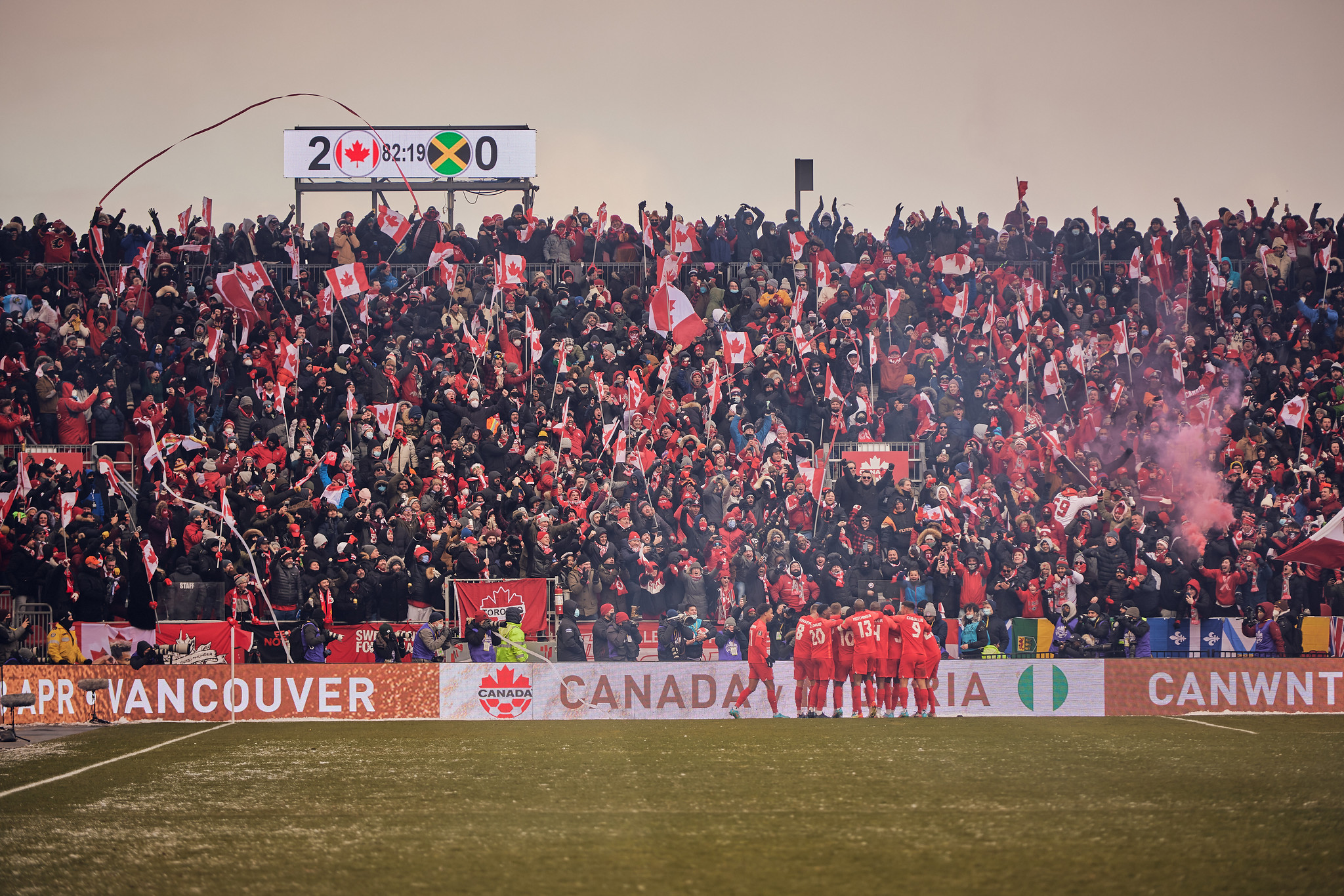
That’s just a great example of what this sport can mean to people, making this World Cup a great opportunity to reflect on why people love soccer.
Soccer can bring joy, pain, frustration, elation and much more, but most importantly, it can also unite.
And in times of great division globally, embracing that unity is crucial.
So although watching or playing a game might feel like life or death, having that perspective is key, as it can help reshape why this sport is well-loved universally, and how it can bring joy through moments such as Canada’s run to the World Cup.
Just take it from someone who has been in this sport a while, David Norman Sr., who participated in the 1986 World Cup with Canada, to understand how important this all is in order to keep growing this emerging soccer culture.
Having been involved in all levels of the sport in this country, he’s seen the power that soccer has to unite, and is hoping this run can help that keep up, continuing to foster that sense of community that distinguishes the sport from others around the world.
Knowing what moments like Canada’s qualifying run can do for a community, he’s hoping that many more follow it, using that stage as a springboard for more development in the sport in the years to come.
“The minority representation is fantastic,” Norman Sr, said. “I am a proponent of the 26 men picked for the country to be the best player for that squad at that time. Minority, color, gender preference, and ethnicity should never play into the selection of the team.”
“(This sport) is such a great opportunity for boys/girls and men/women to be involved on a team and community,” he continued.
“You can learn and get so much joy from the soccer community, regardless of how you are involved.”
 Unique Togetherness
Leave a comment